
Surgical technologist salary is a critical factor for anyone considering a career in the operating room. This essential role, assisting surgeons during procedures, offers a rewarding career path but understanding the financial landscape is key. The demand for skilled surgical technologists continues to grow, yet compensation varies widely based on experience, location, and specialization.
This deep dive explores the intricacies of surgical technologist salaries, examining the factors that influence earnings and providing insights for career planning. We’ll dissect the impact of experience and education, analyze how location and specialization affect income, and explore the benefits and perks associated with this profession. Furthermore, the article will provide actionable strategies for surgical technologists to boost their earning potential, from certifications to professional development.
Understanding the Baseline Compensation for Surgical Technologists is Crucial for Career Planning
A clear understanding of compensation is essential for surgical technologists to effectively plan their careers. This involves knowing the factors that influence salary, the typical salary ranges at different experience levels, and strategies for negotiating a competitive starting salary. This knowledge empowers surgical technologists to make informed decisions about their professional development, including where to work, how to advance their skills, and how to maximize their earning potential.
Factors Influencing Starting Salary
Several factors significantly influence the starting salary of a surgical technologist, varying across different geographical locations. Experience is a primary determinant, with those possessing prior experience in a surgical setting or related healthcare roles often commanding higher starting salaries. Certifications, such as the Certified Surgical Technologist (CST) credential offered by the National Board of Surgical Technology and Surgical Assisting (NBSTSA), also contribute to higher compensation. The CST demonstrates a commitment to professional standards and a verified level of competence. Geographical location plays a crucial role; metropolitan areas and regions with a higher cost of living typically offer higher salaries to compensate for expenses. The demand for surgical technologists in a specific area also influences starting salaries. Areas experiencing a shortage of qualified professionals may offer more competitive compensation packages to attract and retain talent. Additionally, the type of healthcare facility impacts pay. Hospitals and large surgical centers often offer higher salaries and more comprehensive benefits packages compared to smaller clinics or outpatient facilities. The specific duties and responsibilities associated with the role, such as specialization in a particular surgical area (e.g., cardiac, neurosurgery) or the performance of advanced tasks, can also influence starting salary.
Typical Salary Ranges
The following table provides a breakdown of typical salary ranges for surgical technologists based on experience level. It also highlights common benefits and location considerations.
| Experience Level | Average Annual Salary | Benefits | Location Considerations |
|---|---|---|---|
| Entry-Level | $45,000 – $55,000 |
|
Generally lower in rural areas; higher in urban centers with high demand. |
| Mid-Career | $55,000 – $70,000 |
|
Salaries increase with specialization or experience in high-volume surgical centers. |
| Experienced | $70,000+ |
|
Highest salaries often found in major metropolitan areas with teaching hospitals or specialized surgical practices. |
Negotiating a Starting Salary
Effective negotiation is crucial for securing a competitive starting salary. Thorough research is essential. Prospective surgical technologists should research salary ranges for their experience level and location using resources such as the Bureau of Labor Statistics (BLS), Salary.com, and Glassdoor. Highlighting transferable skills and prior work experience is important. Even if prior experience is not directly in surgical technology, skills such as teamwork, communication, attention to detail, and problem-solving are valuable and should be emphasized. Demonstrate how these skills can be applied to the role. Be prepared to discuss your salary expectations and be confident in your value. Quantify your accomplishments whenever possible. For example, if you have experience in a fast-paced environment, state the number of procedures you assisted with or the efficiency improvements you contributed to. This provides concrete evidence of your abilities.
Investigating the Impact of Experience and Education on Earning Potential in the Field of Surgical Technology is Vital
Understanding how experience and education influence a surgical technologist’s salary is critical for long-term career planning. Both factors play significant roles in determining earning potential and shaping career advancement opportunities. This section delves into the specifics of experience-based salary increases and the impact of different educational pathways on both compensation and career trajectory.
Years of Experience and Salary Increases
The accumulation of experience directly translates to increased earning potential for surgical technologists. As professionals gain expertise, their skills become more refined, their efficiency improves, and their value to employers increases. This increased value is often reflected in higher salaries.
For example, a surgical technologist with less than one year of experience might earn an entry-level salary, potentially in the range of $40,000 to $48,000 annually. However, after 3 to 5 years of experience, demonstrating proficiency in a wider range of surgical procedures and potentially taking on supervisory responsibilities, their salary could increase to between $50,000 and $65,000.
After 5 to 10 years of experience, a surgical technologist who has consistently performed well, possibly specializing in a specific surgical area (such as cardiovascular or orthopedic surgery) or taking on leadership roles within the operating room, may see their salary reach $65,000 to $80,000 or even higher. Senior surgical technologists with 10 or more years of experience, particularly those in leadership positions or working in high-demand specialties, can command salaries exceeding $80,000, and sometimes even surpass $90,000. These figures are estimates, and actual salaries can vary based on location, employer, and individual skills. It’s important to remember that these are just general examples, and the specific salary increments can vary depending on various factors.
Educational Pathways and Their Impact
The educational path chosen by a surgical technologist significantly impacts their career trajectory and earning potential. Several educational options are available, each with its own advantages and disadvantages.
- Certificate Programs: These programs typically take 9 to 12 months to complete and provide the foundational knowledge and skills necessary to become a surgical technologist. Graduates are eligible to take the Certified Surgical Technologist (CST) exam. While certificate holders can secure entry-level positions, their salary potential might be lower compared to those with associate’s or bachelor’s degrees.
- Associate’s Degrees: Associate’s degree programs, usually taking two years, offer a more in-depth curriculum, including a broader range of surgical procedures and potentially some management or leadership training. Graduates often have a higher starting salary than those with certificates and are better positioned for career advancement.
- Bachelor’s Degrees: Bachelor’s degree programs, which typically take four years, offer the most comprehensive education. They often include advanced coursework in areas like healthcare administration, leadership, and research. While not always a requirement for entry-level positions, a bachelor’s degree can significantly boost long-term earning potential and open doors to leadership roles, such as surgical services manager or educator.
Comparison Table: Education Level, Salary, Responsibilities, and Progression
The following table summarizes the differences in salary, job responsibilities, and career progression opportunities for surgical technologists with different educational backgrounds.
| Education Level | Typical Salary Range | Job Responsibilities | Career Progression |
|---|---|---|---|
| Certificate | $40,000 – $55,000 | Assisting surgeons during procedures, preparing the operating room, sterilizing equipment. | Can advance to senior surgical technologist roles, potentially with additional certifications or experience. Limited leadership opportunities. |
| Associate’s Degree | $48,000 – $68,000 | Performing all responsibilities of a certificate holder, with potentially more advanced procedures and responsibilities. May supervise or train new surgical techs. | More opportunities for specialization, leadership roles (e.g., lead surgical tech), and potential for advancement to surgical services management. |
| Bachelor’s Degree | $55,000 – $85,000+ | All responsibilities of associate’s degree holders, with a greater understanding of healthcare administration and leadership principles. May participate in research or education. | Stronger prospects for leadership positions (e.g., surgical services manager, educator), higher earning potential, and opportunities to move into administrative roles. |
Determining the Influence of Location and Specialization on Surgical Technologist Income is Essential
Understanding the nuances of surgical technologist compensation requires a deep dive into the factors that shape earnings. Geographic location and specialized expertise significantly influence a surgical technologist’s salary, creating a varied landscape across the United States. This section will explore how these elements impact earning potential, providing valuable insights for career planning.
Geographic Influence on Surgical Technologist Salaries
The salary of a surgical technologist is not uniform across the United States. Regional economic conditions, cost of living, and the demand for qualified professionals play significant roles in determining compensation levels.
High-paying states often have a higher cost of living, reflecting the economic realities of the area. For example, states like California and New York typically offer higher salaries for surgical technologists. This is often driven by the concentration of hospitals and surgical centers, along with a strong demand for skilled healthcare professionals. These states also face a higher cost of living, which necessitates increased compensation to attract and retain qualified staff. Conversely, states with a lower cost of living, such as some in the Midwest or Southeast, may offer lower salaries. While the compensation might be less, the overall affordability of living in these regions can offset some of the difference. However, it’s crucial to consider the trade-offs between higher salaries and the associated expenses of living in more expensive areas.
The demand for surgical technologists also varies geographically. Urban areas and regions with a large elderly population often have a greater need for surgical services, which translates into higher demand and potentially higher salaries. Rural areas may experience shortages, leading to increased compensation to attract talent, though the overall salary levels might still be lower due to economic factors.
Impact of Specialization on Earning Potential
Specialization within the field of surgical technology offers opportunities for increased earning potential. Technologists who develop expertise in specific surgical areas can command higher salaries due to their advanced skills and knowledge.
Different surgical specialties require varying levels of expertise and training. Surgical technologists who specialize in high-demand or complex procedures are often rewarded with higher compensation. Furthermore, specialized training and certifications can enhance a surgical technologist’s marketability and earning potential. This section examines several key specializations and their impact on income.
Here’s an overview of several surgical specializations, their typical salary ranges, and the associated responsibilities:
-
Cardiovascular Surgery: Surgical technologists specializing in cardiovascular procedures assist in surgeries involving the heart and blood vessels.
- Salary Range: $65,000 – $95,000+ per year.
- Responsibilities: Preparing the operating room for cardiac procedures, assisting the surgical team with complex instrumentation, and monitoring patient vitals during surgery.
-
Orthopedic Surgery: Orthopedic surgical technologists assist in procedures related to bones, joints, and musculoskeletal systems.
- Salary Range: $60,000 – $90,000+ per year.
- Responsibilities: Preparing sterile fields, handling orthopedic instruments (e.g., drills, saws, implants), and assisting surgeons with fracture repairs, joint replacements, and other orthopedic procedures.
-
Neurosurgery: Neurosurgical technologists assist in complex procedures involving the brain, spinal cord, and nervous system.
- Salary Range: $70,000 – $100,000+ per year.
- Responsibilities: Setting up specialized equipment, assisting with delicate instrument handling, and monitoring patient neurological status during procedures like craniotomies and spinal fusions.
-
Urology: Surgical technologists specializing in urology assist in procedures involving the urinary tract and male reproductive system.
- Salary Range: $58,000 – $85,000+ per year.
- Responsibilities: Preparing instruments and equipment for procedures like prostatectomies, cystoscopies, and kidney stone removal, and assisting surgeons with specialized techniques.
-
Robotic Surgery: Surgical technologists in robotic surgery assist surgeons using robotic surgical systems.
- Salary Range: $68,000 – $98,000+ per year.
- Responsibilities: Operating and maintaining robotic surgical equipment, assisting with patient positioning, and coordinating with the surgical team during minimally invasive procedures.
Examining the Benefits and Perks Associated with the Surgical Technologist Profession is Important
The total compensation package for a surgical technologist extends far beyond the base salary. Understanding the full scope of benefits and perks is crucial for evaluating job offers and planning a fulfilling career. These additional components significantly enhance the overall value of the profession and contribute to job satisfaction and financial well-being.
Typical Benefits Packages for Surgical Technologists
Surgical technologists often receive a comprehensive benefits package designed to support their health, financial security, and professional growth. These benefits are a significant part of the overall compensation and should be carefully considered when evaluating employment opportunities.
- Health Insurance: Medical, dental, and vision insurance are standard benefits. The employer typically covers a portion of the premium, with the employee contributing the remainder. The specific plans and coverage levels vary by employer but generally include access to preventative care, specialist visits, and hospitalization.
- Retirement Plans: Employers often offer retirement savings plans, such as a 401(k) or a similar defined contribution plan. Employees can contribute a portion of their salary, and the employer may match a percentage of the contributions. This is a crucial element for long-term financial planning.
- Paid Time Off (PTO): PTO typically includes vacation days, sick leave, and holidays. The amount of PTO varies based on the employer, the employee’s years of service, and full-time or part-time status. This allows surgical technologists to take time off for rest, relaxation, and personal appointments.
- Professional Development Opportunities: Many employers provide opportunities for continuing education and professional development, such as:
- Reimbursement for continuing education courses or workshops.
- Financial assistance for certifications or advanced training.
- Paid time off to attend professional conferences.
This supports the ongoing learning and skill enhancement of surgical technologists.
Non-Monetary Benefits for Surgical Technologists
Beyond financial compensation, the surgical technologist profession offers several non-monetary benefits that contribute to a fulfilling and rewarding career. These perks enhance job satisfaction and create opportunities for professional growth and diverse experiences.
- Continuing Education: The surgical technology field constantly evolves with new techniques and technologies. Employers often support continuing education, providing opportunities to learn and stay current. This can involve workshops, seminars, and online courses. This is essential for maintaining certification and licensure.
- Professional Development: Opportunities for career advancement include leadership roles, such as supervisory positions or specialized roles within specific surgical departments. Many surgical technologists pursue certifications in specialized areas, like cardiac surgery or neurosurgery, to enhance their skills and earning potential.
- Diverse Surgical Settings: Surgical technologists can work in various settings, including hospitals, outpatient surgical centers, and private practices. Each setting offers unique experiences and learning opportunities. This variety can prevent burnout and provide exposure to different surgical specialties.
Value of Benefits: A Hypothetical Scenario
To illustrate the value of benefits, consider a surgical technologist with a base salary of $60,000 per year. Let’s examine how the benefits package enhances their total compensation.
- Health Insurance: Assuming the employer contributes $6,000 annually towards health insurance premiums, this is added to the total compensation.
- Retirement Plan: If the employer matches 3% of the employee’s contribution to a 401(k), and the employee contributes $3,000 annually, the employer contributes $90.
- Paid Time Off: Valuing the PTO at an average daily rate, the 2 weeks of vacation, and 1 week of sick leave, adds another $3,461 to the total compensation.
- Professional Development: Considering $500 annually for continuing education courses.
This means the total compensation package is approximately $70,000, significantly higher than the base salary alone. This calculation highlights the importance of considering all aspects of a job offer, not just the base salary.
Exploring Strategies for Surgical Technologists to Increase Their Earning Capacity is Necessary
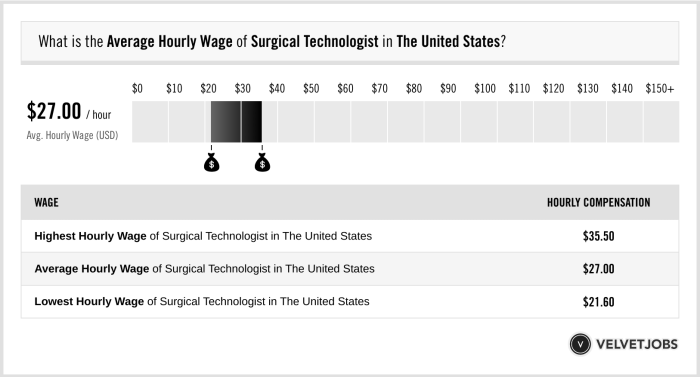
Surgical technologists looking to maximize their earning potential have several avenues to explore. Beyond the foundational Certified Surgical Technologist (CST) credential, strategic career development, and savvy negotiation can significantly impact their income. This section Artikels key strategies for surgical technologists to elevate their earning capacity and advance their careers.
Obtaining Certifications Beyond the CST Credential
Expanding one’s skillset through additional certifications is a proven method for increasing earning potential. Specialized certifications demonstrate a commitment to professional development and proficiency in specific surgical areas, making technologists more valuable to employers. These credentials often lead to higher salaries, reflecting the advanced knowledge and expertise gained.
The process typically involves:
- Meeting eligibility requirements, which often include holding a CST credential and a certain amount of experience.
- Completing an application and providing supporting documentation.
- Successfully passing a comprehensive examination.
Some valuable certifications include:
- Certified Surgical First Assistant (CSFA): This certification allows surgical technologists to function as first assistants during surgical procedures, performing tasks such as tissue retraction, suturing, and hemostasis. The CSFA credential, offered by the National Board of Surgical Technology and Surgical Assisting (NBSTSA), can lead to a significant salary increase, often by 10-20% or more, due to the expanded scope of practice. For instance, a surgical technologist with a CSFA credential in a major metropolitan area might earn $80,000-$100,000 annually, compared to $65,000-$80,000 for a CST.
- Certified in Robotic Surgery (CRS): With the increasing prevalence of robotic surgery, this certification, often offered by various surgical societies and training programs, is highly sought after. Technologists certified in robotic surgery are in high demand and can command a premium salary, reflecting the specialized skills needed to assist in these complex procedures.
- Specialty Certifications: Certifications in specific surgical specialties, such as cardiovascular surgery, neurosurgery, or orthopedic surgery, demonstrate focused expertise. These certifications, often offered by professional organizations related to those specialties, can make a surgical technologist more competitive for positions in specialized surgical teams, potentially increasing their salary by 5-15%.
Professional Development Resources
Continuous learning is crucial for career advancement. Surgical technologists should actively seek out professional development opportunities to stay current with the latest surgical techniques, technologies, and best practices. These resources provide valuable skills and knowledge, making technologists more competitive in the job market and potentially leading to higher salaries.
Here are some valuable resources:
- Association of Surgical Technologists (AST) Conferences and Workshops: The AST offers annual conferences and regional workshops that provide continuing education credits, networking opportunities, and exposure to new technologies and techniques.
- Online Continuing Education Courses: Numerous online platforms, such as those offered by surgical technology schools and professional organizations, provide convenient access to continuing education courses. These courses cover a wide range of topics, from surgical instrumentation to advanced surgical techniques.
- Hospital-Based Training Programs: Many hospitals and surgical centers offer internal training programs and workshops that focus on specific surgical specialties or equipment.
- Surgical Technology Journals and Publications: Subscribing to journals such as the *Journal of Surgical Technology* keeps surgical technologists informed about the latest developments in the field.
- Professional Certifications and Review Courses: Preparation courses for certifications such as the CSFA or CRS provide focused training and improve the likelihood of passing the certification exams, leading to enhanced career opportunities.
Last Recap
In conclusion, navigating the world of surgical technologist salaries requires a comprehensive understanding of various influencing factors. From the initial negotiation to long-term career advancement, strategic planning is essential. By leveraging experience, pursuing advanced education, and specializing in high-demand areas, surgical technologists can significantly enhance their earning potential and build a fulfilling career. Ultimately, informed decision-making and continuous professional development are the cornerstones of financial success in this vital field.
